Dell Support
Designing an AI-powered support experience that helps customers reach the right solution faster
Role: Principal Designer | Timeline: 2022– Present
Scope: Research synthesis, experience strategy, information architecture, interaction design, prototyping, and design principles
Context
Dell Support serves consumer and enterprise customers across troubleshooting, drivers, diagnostics, warranty, repairs, orders, and technical content.
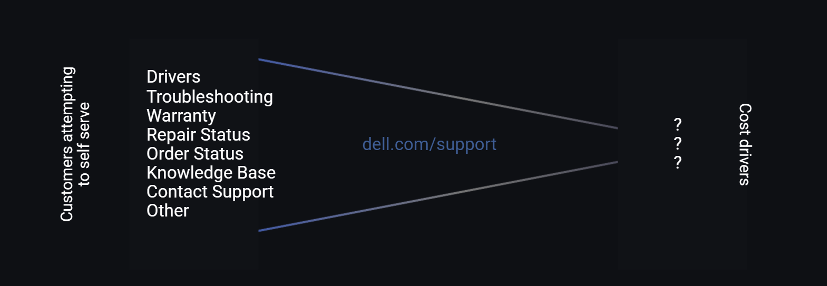
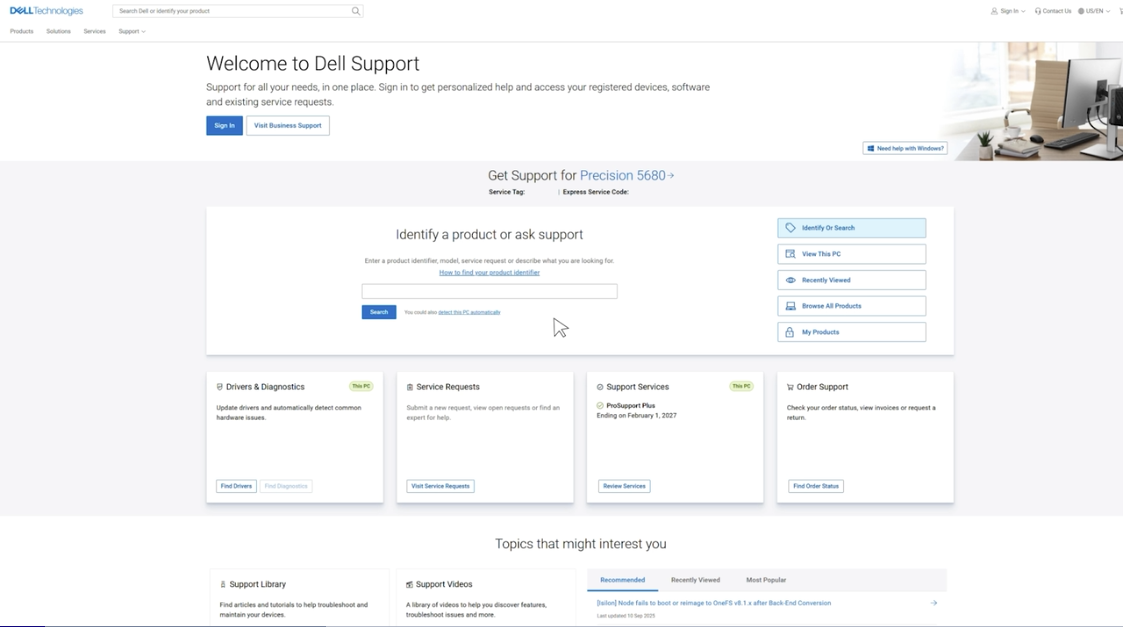
Over time, these services had developed into a large ecosystem of pages, tools, and entry points. Customers arrived through search engines, bookmarks, emails, product pages, and the Support homepage, often without knowing which experience could best solve their problem.
The challenge
Customers usually understood their problem, but they did not always understand Dell’s support structure.
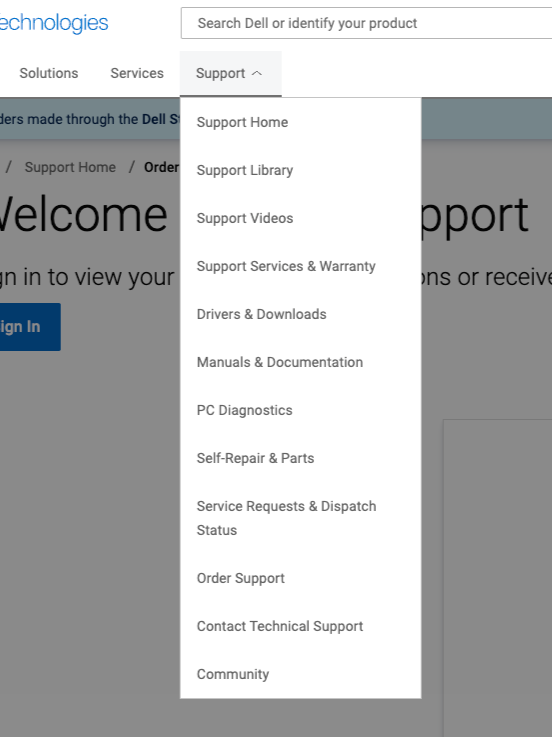
Static menus required them to choose between drivers, diagnostics, troubleshooting, warranty, repairs, knowledge articles, or contacting support before Dell had enough context to guide them.
When the first path failed, customers moved between experiences, repeated information, or escalated to assisted support.
The opportunity was larger than redesigning the homepage. We needed a support model that could:
Work across multiple entry points
Serve both occasional customers and technical power users
Use product and customer context without creating friction
Make escalation easy when self-service was no longer helpful
Research and discovery
Defining the experience
My contribution
The goal was to transform Dell Support from a collection of destinations into an intelligent starting point that understands customer intent and guides each person toward the right resolution path
The strategy was grounded in a combination of customer research and operational data.
Research methods: Web and program analytics, consumer-versus-enterprise usage analysis, support-case ratio analysis, support-type influencer analysis, competitive analysis, customer research, experience audits, and cross-functional workshops.
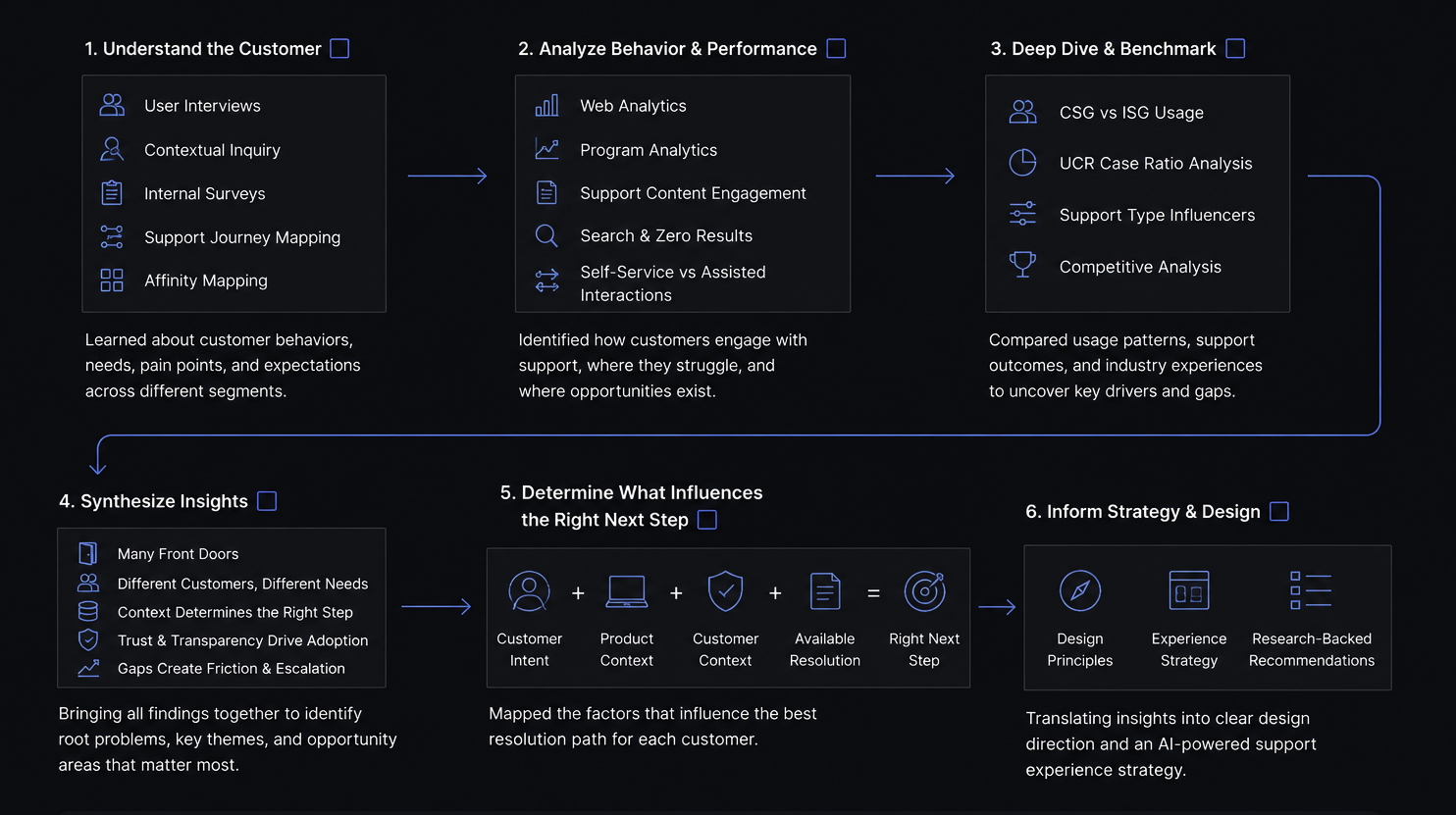
This visual summarizes the range of research methods and data sources used to understand customer behavior, support needs, and the factors influencing the right resolution path. Research findings have been summarized, anonymized, and aggregated to protect customer and company confidentiality.
The research revealed four important patterns
There was no single front door
Many customers bypassed the homepage and entered through search results, bookmarked pages, or direct links. The experience therefore needed to be modular enough to help people wherever they arrived.
Different customers needed different levels of guidance
Some customers needed conversational help understanding their problem. Others already knew they needed a driver, diagnostic, or specific support resource and wanted the fastest possible path.
Context changed the correct next step
The best resolution depended on the customer’s product, authentication status, warranty, telemetry, support history, and intent.
Context changed the correct next step
The best resolution depended on the customer’s product, authentication status, warranty, telemetry, support history, and intent.
Trust mattered as much as intelligence
Customers needed to understand what the AI could do, why it was recommending an action, and how to reach a person when necessary.
Research shifted the project from designing another chatbot to creating an intelligent support layer across Dell Support.
Core interaction model:
Understand intent → Add context → Recommend the next step → Support resolution → Escalate when needed
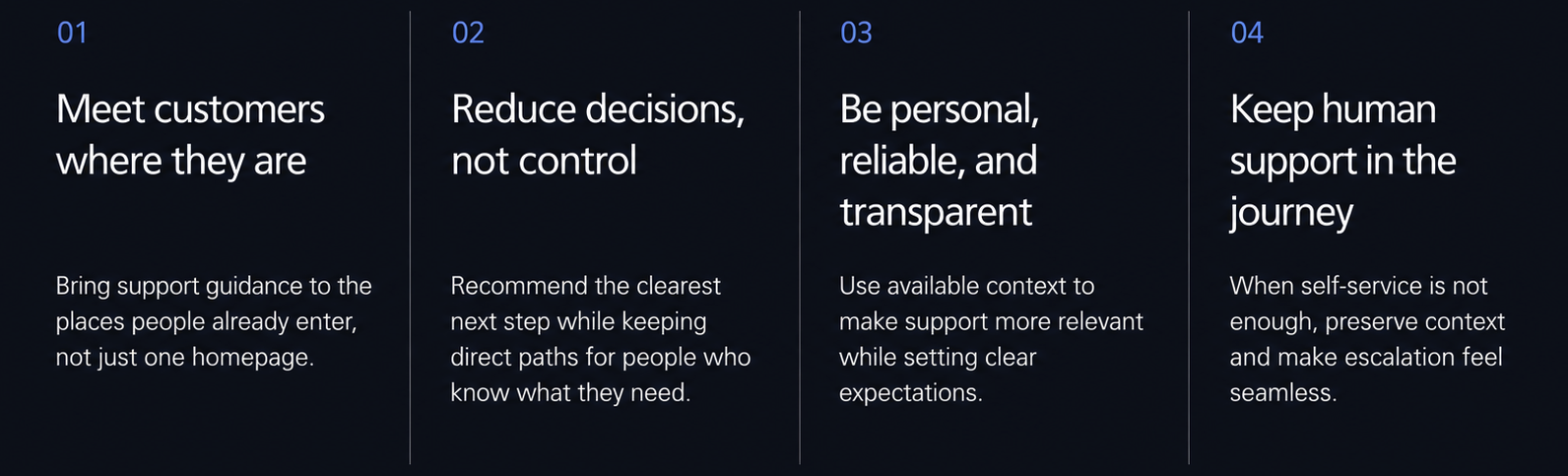
The experience followed four principles:
Meet customers where they are: Bring guidance to relevant support pages, not only the homepage.
Reduce decisions, not control: Recommend the best next step while preserving direct paths.
Be personal and transparent: Use available context while clearly communicating capabilities and limitations.
Design human support into the journey: Preserve context when escalation is needed.
The redesigned experience
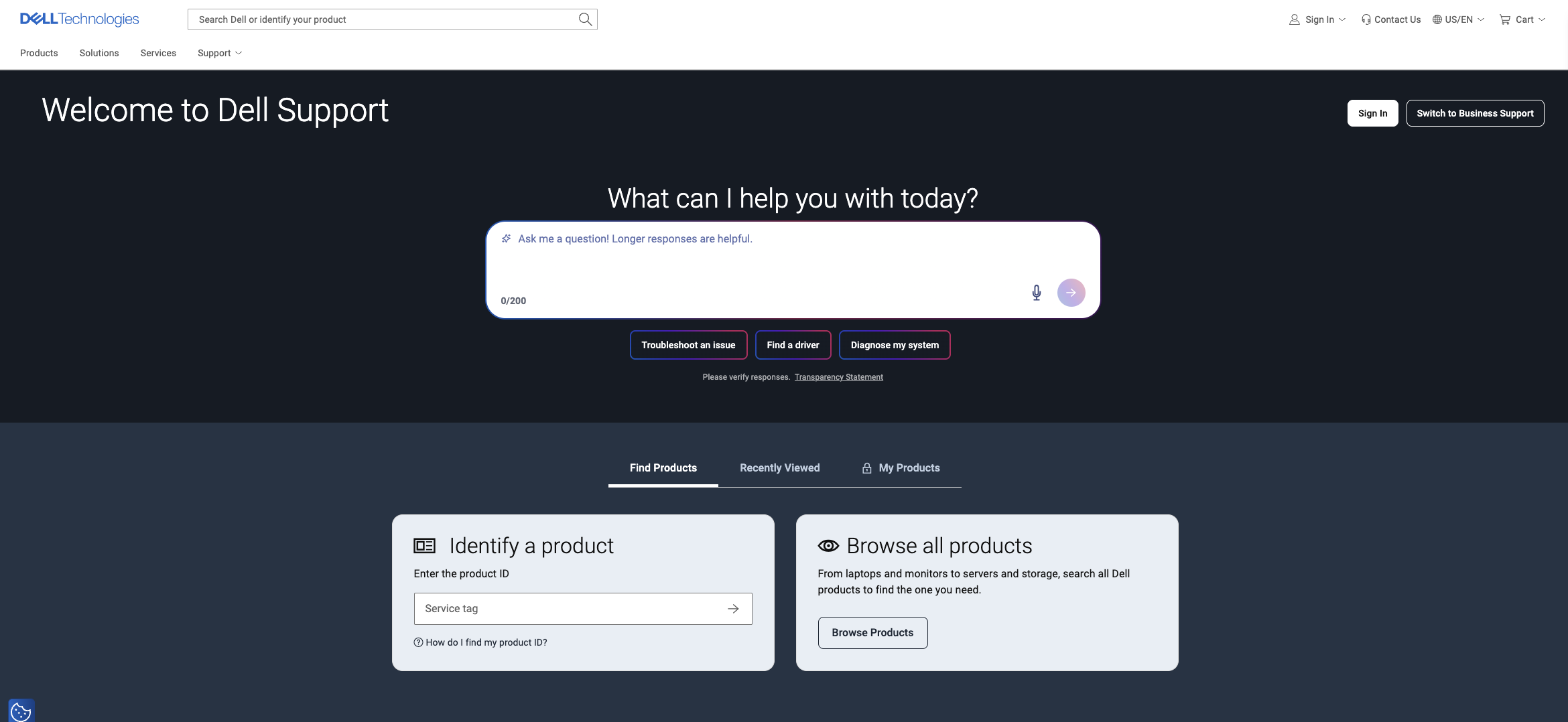
Customers can describe their issue naturally or select a common task such as troubleshooting, drivers, or diagnostics.
The AI interprets intent, adds available product and customer context, and routes them to the most relevant resolution, diagnostics, updates, repair, or assisted support. The interaction model can also extend across the broader Dell Support ecosystem.
The experience in action:
Driver help: Describe the issue → identify the product → recommend the relevant update path.
Troubleshooting: Explain the problem → answer necessary questions → begin diagnostics or guided resolution.
Escalation: Preserve the conversation and product context → transition to assisted support without restarting.
For the full experience, explore it live on Dell Support.
I translated customer research, support analytics, and operational complexity into the experience strategy, interaction model, design principles, and prototypes for the AI-powered support entry experience.
I worked with Product, Engineering, AI, Analytics, Content, and Business to align customer needs with technical capabilities and business goals, while accounting for incomplete information, multiple intents, error states, fallback paths, and human handoffs.