InterAct
Enterprise interpreter scheduling, simplified
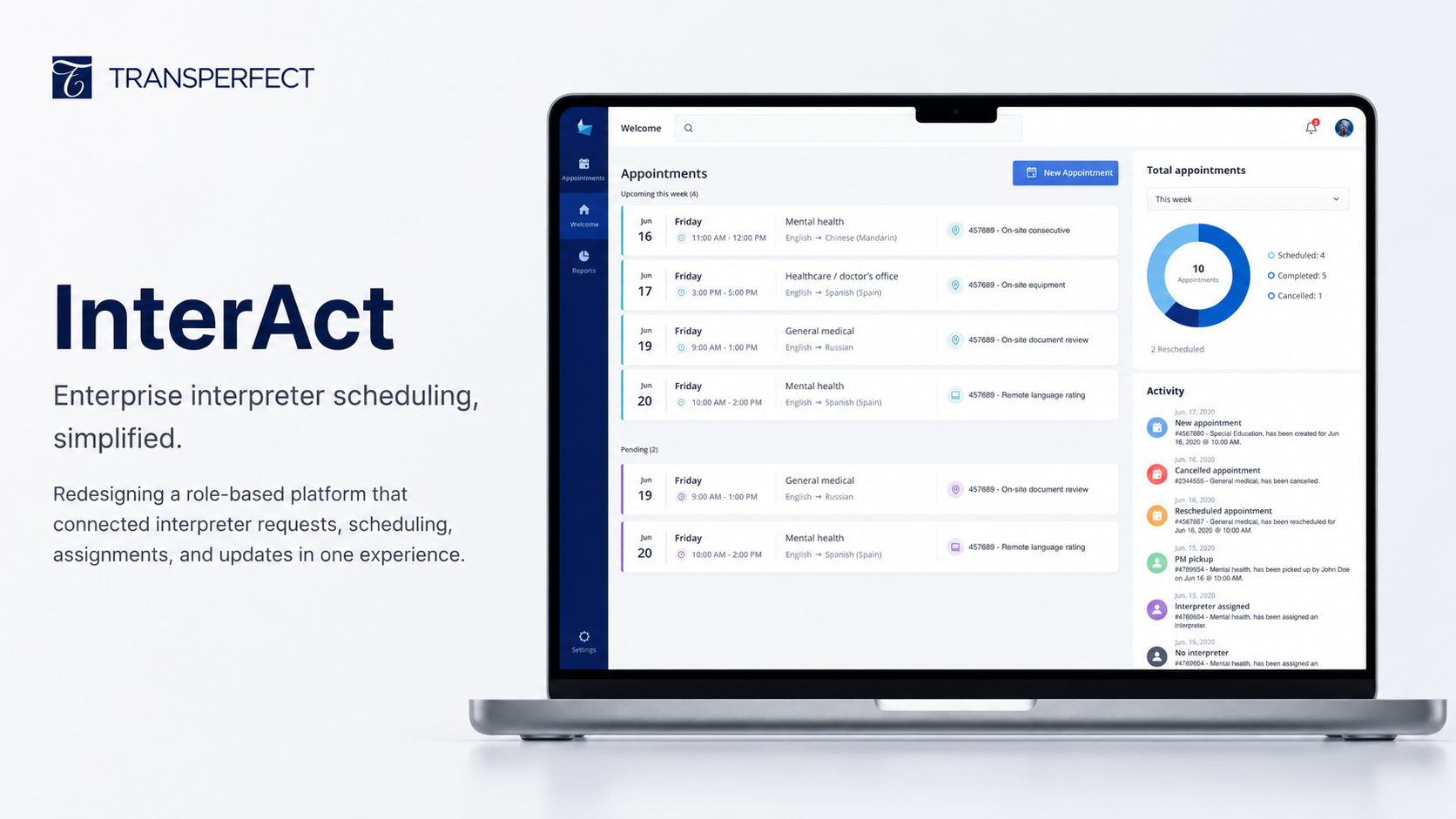
Role: Lead UX Designer | Timeline: 2020–January 2021
Scope: Research, UX strategy, interaction design, visual design, prototyping, and design-system patterns
Context
TransPerfect is a global language and technology company with more than 9,500 employees and offices in 140+ cities.
As a Lead UX Designer, I led the redesign of InterAct, a platform used by clients, project managers, and interpreters to manage high volumes of interpretation requests. I owned the experience from research through visual design and prototyping, replacing fragmented email- and phone-based coordination with clearer, role-based workflows. The redesigned platform launched in January 2021.
The challenge
Booking an interpreter involved much more than choosing a language and time.
Clients submitted requests and approved quotes. Project managers searched for qualified interpreters, confirmed availability, managed changes, and coordinated completion. Interpreters needed enough information to evaluate and accept assignments. Much of this work happened through emails and phone calls, making progress difficult to track and creating repetitive coordination.
The platform managed appointments, but it did not manage the complete experience around them.
The goal was to turn the complex process of sourcing, scheduling, and coordinating interpreters into one clear, connected workflow.
What research revealed
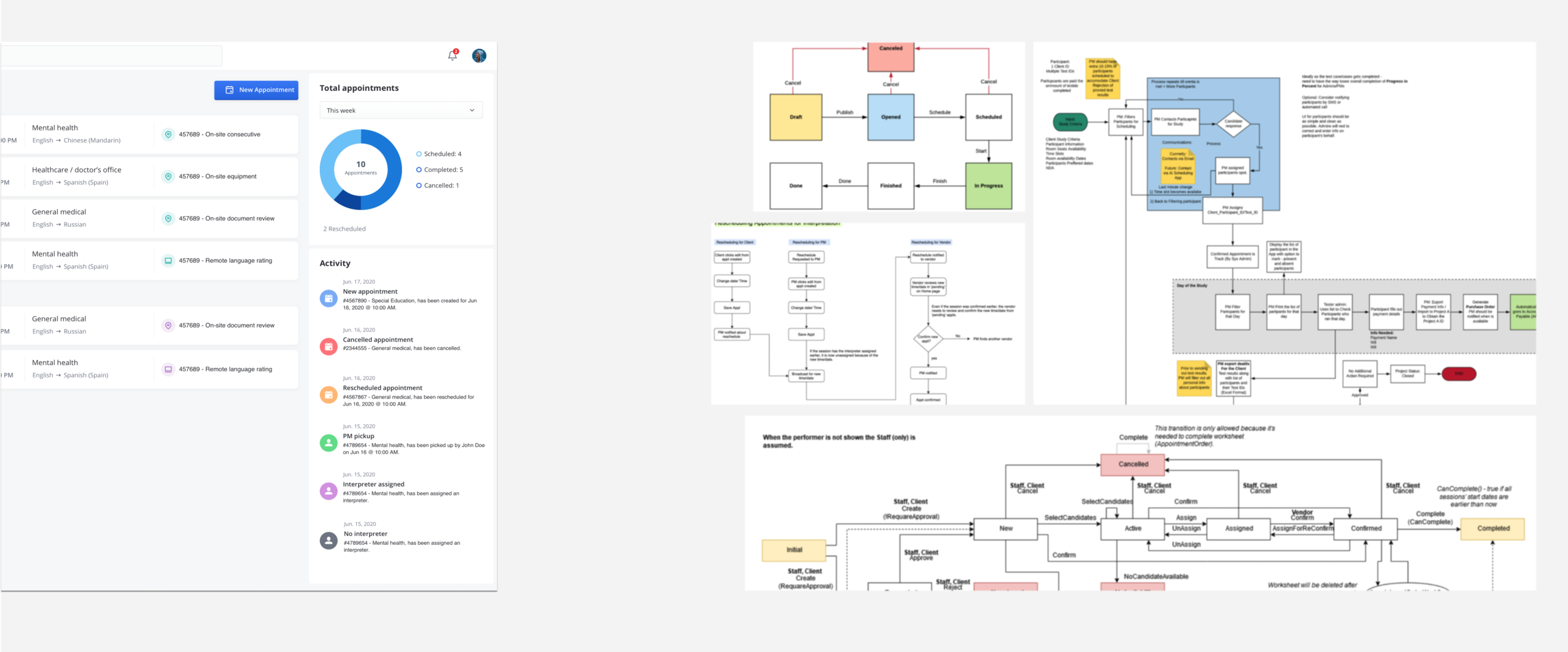
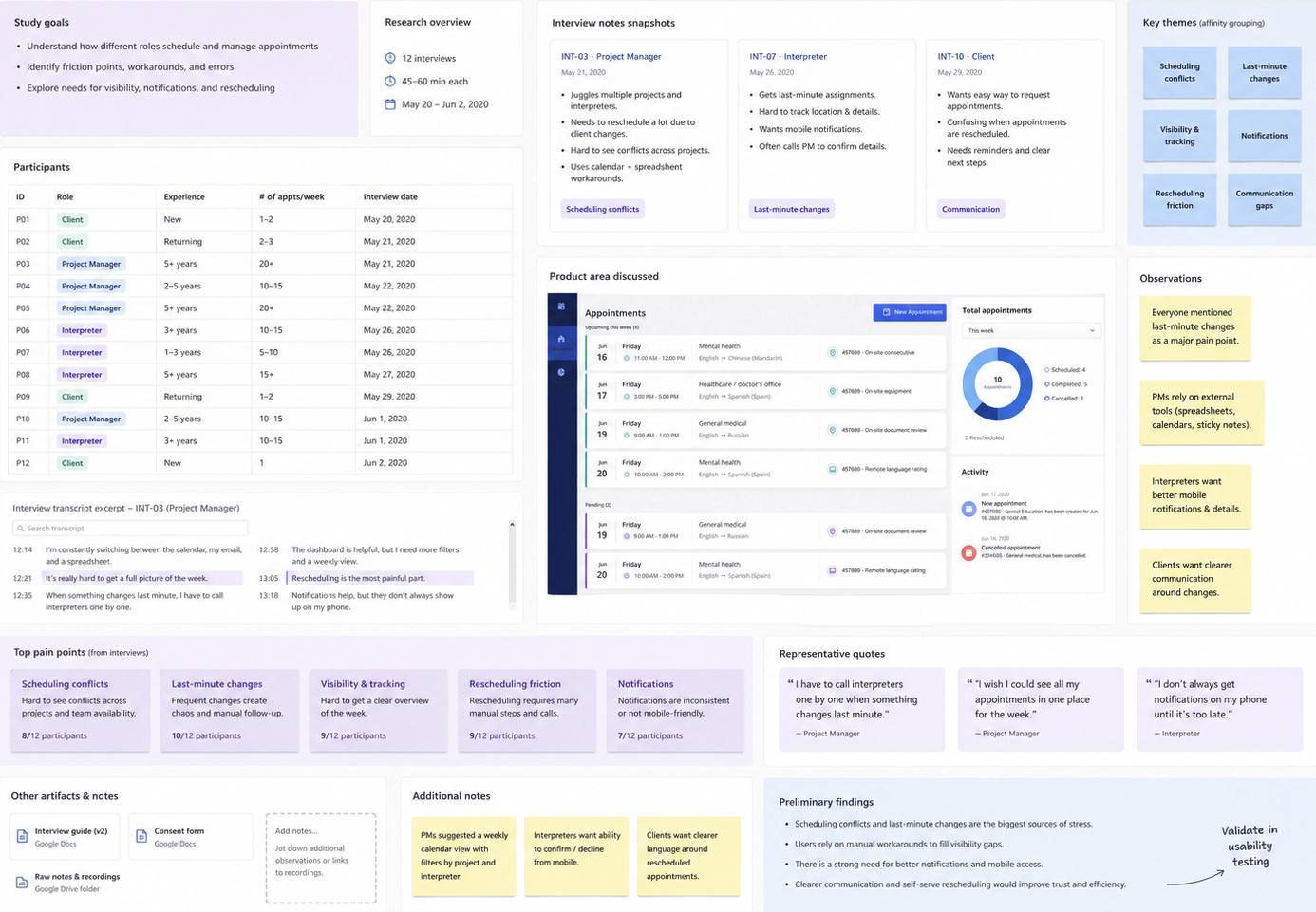
I observed project managers handling live requests, interviewed stakeholders, and mapped the handoffs between clients, project managers, and interpreters.
Clients wanted to track requests without contacting a project manager. Project managers needed to see blocked jobs and required actions. Interpreters needed clearer information before accepting work.
This shifted the project from redesigning individual screens to creating one shared operational system.
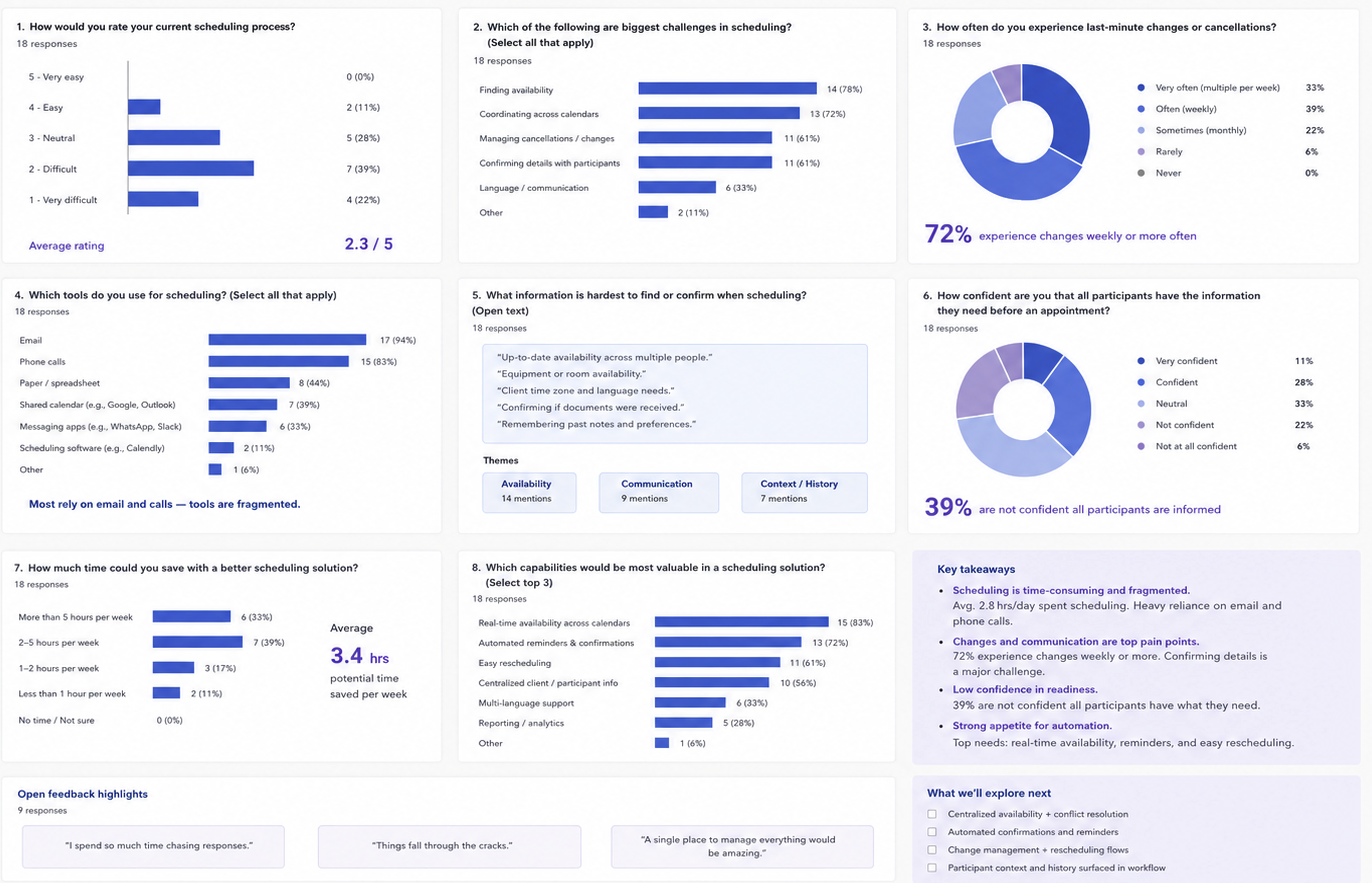
Most communication was caused by missing visibility
Research methods: User interviews, contextual inquiry, internal surveys, workflow mapping, affinity mapping, competitive analysis, and usability testing.
Designing around one shared lifecycle
I organized the experience around the complete interpretation journey:
Request → Quote → Match → Confirm → Deliver → Complete
Everyone worked from the same job record, while the interface changed according to their role and responsibilities.
This structure guided the information architecture, dashboards, scheduling workflows, activity history, and status model.
What I designed
Clearer requests and scheduling
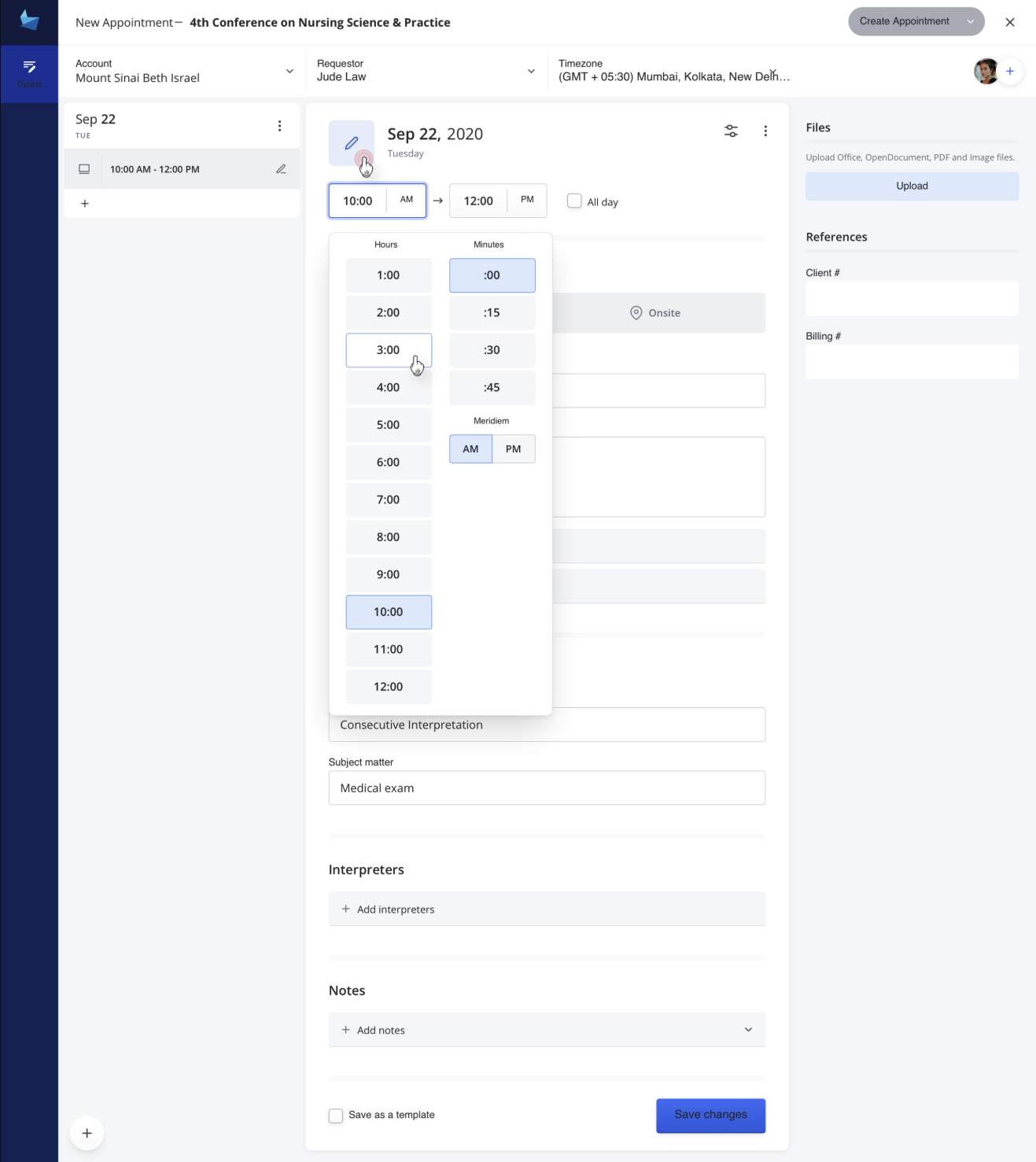
The redesigned flow grouped related information into manageable steps while keeping advanced options available for recurring appointments, multiple dates, quotes, and specialized requirements.
People could also duplicate previous appointment details instead of rebuilding repeat requests from the beginning.
Visible progress and ownership
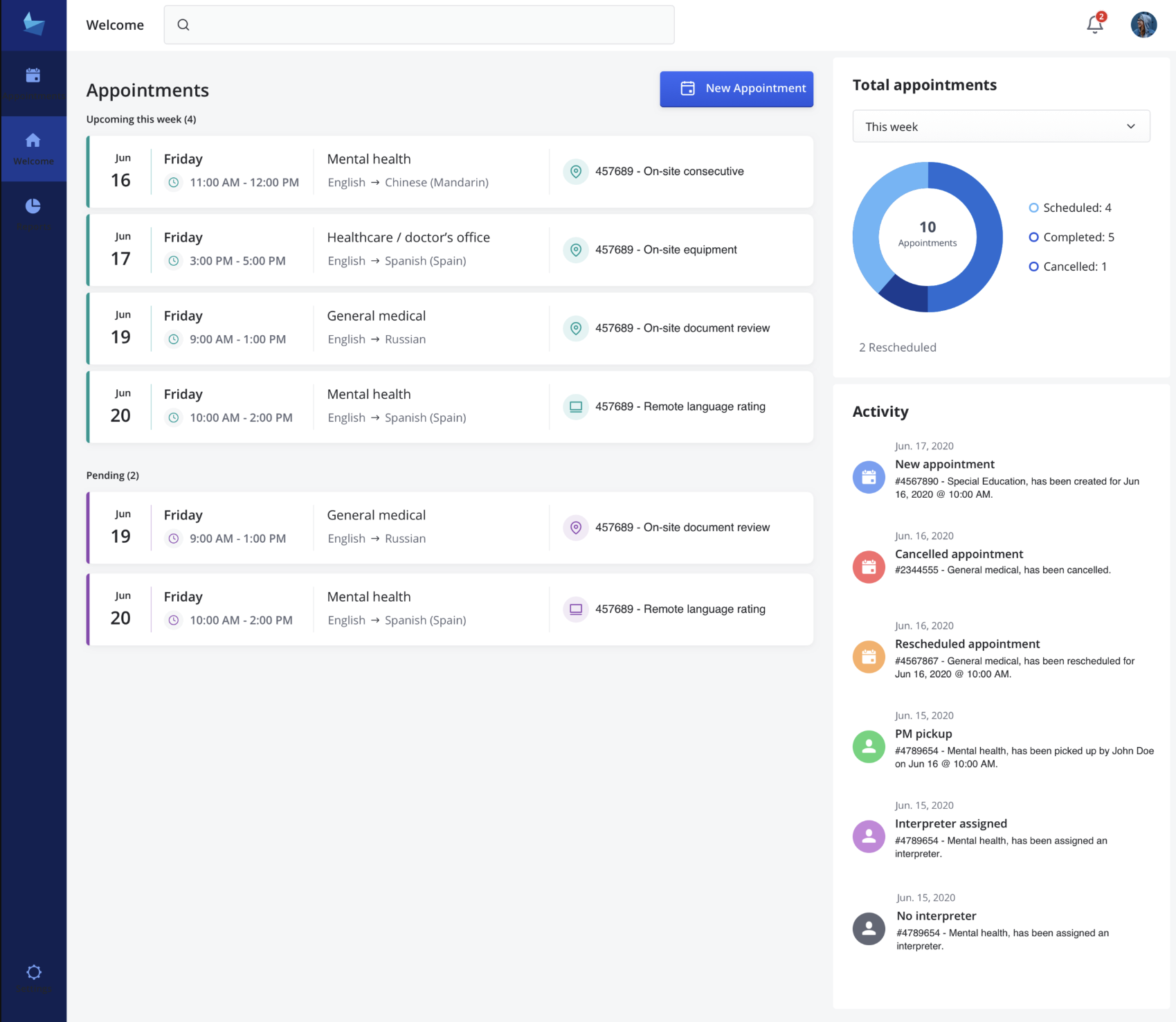
Consistent statuses showed whether requests were pending, assigned, confirmed, rescheduled, cancelled, or completed.
An activity timeline captured important updates in one place, making InterAct a shared source of truth instead of requiring people to reconstruct progress from emails.
Role-based dashboards
Each role received a focused view of what mattered next.
Clients could create and track requests. Project managers could monitor assignments, schedule changes, and activity. Interpreters could evaluate opportunities based on their qualifications and availability.
Creating a scalable design system
The existing design system did not support many of the complex scheduling interactions required by the platform.
I reused established components where possible and created new patterns for appointment cards, statuses, filters, forms, calendar states, activity history, and role-based actions.
Outcome
The redesigned InterAct platform brought requests, quotes, scheduling, interpreter assignments, updates, and completion into one connected experience.
It gave clients greater visibility, helped project managers coordinate complex work more efficiently, and gave interpreters clearer information about relevant opportunities.
The product launched in January 2021 and established a stronger foundation for TransPerfect’s enterprise interpretation operations.
I owned the design process from research through final prototype.
My most important contribution was defining the interaction model that connected three different roles across one complex service lifecycle in addition to redesigning individual screens.
This project reinforced that simplifying enterprise software does not mean removing complexity. It means organizing that complexity so each person sees the right information and action at the right moment.